Scientific Methodology & Cultivation Protocol
The precise biochemical transformation of agricultural parali (paddy straw) into an enriched composite bed substrate for Agaricus bisporus (Button Mushrooms), validated across five experimental batches at MIET Incubation Forum.
Why Parali Works: Lignocellulose Breakdown
Agaricus bisporus is a saprophytic fungus that relies on partially decomposed lignocellulosic materials. While cereal straw has traditionally required animal manures, our formula demonstrates that parali (paddy straw) supplemented with wheat husk (bhusa), inorganic nitrogen (urea), and gypsum creates an ideal selective ecosystem.
80:1 → 25:1
Raw straw C:N ratio balanced via calibrated urea solutions for thermophilic microbes.
pH 7.2 - 7.5
Calcium sulfate neutralizes organic acids and flocculates colloidal straw particles.
65% - 70%
Optimum hydration without waterlogging to preserve vital aerobic core channels.
- 1Mesophilic Phase (25-40°C): Fungi and bacteria consume simple soluble sugars, initiating pile warm-up.
- 2Thermophilic Phase (50-65°C): Heat-tolerant actinomycetes soften waxy parali cuticles and synthesize microbial protein.
- 3Conditioning Phase (45-50°C): Ammonia is converted into microbial biomass, creating a selective substrate exclusively palatable to mushroom spawn.
Materials and Quantities Across All 5 Batches
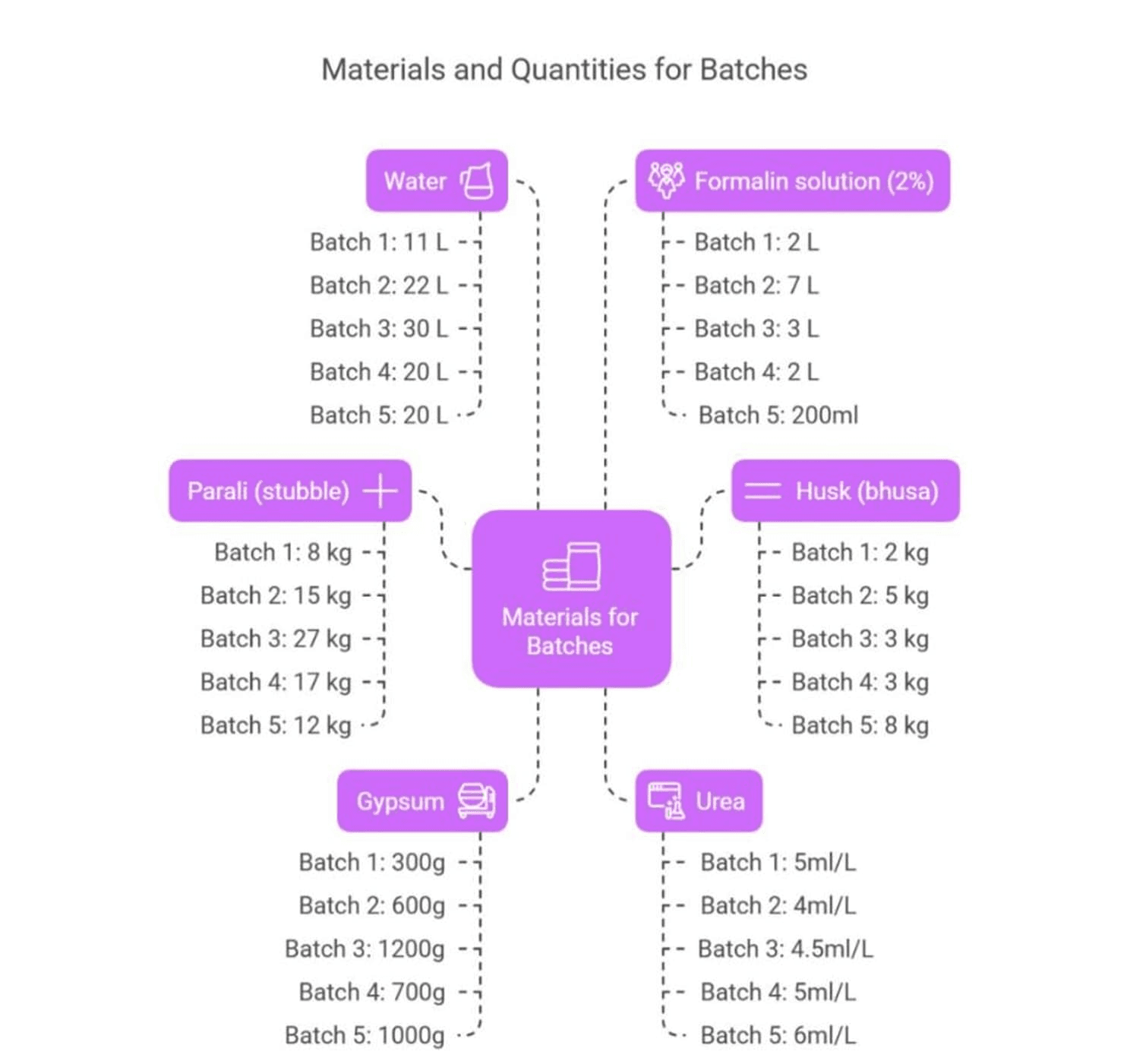
As charted in the original research data, five distinct formulation recipes were tested. Each batch adjusted the core ratio of Parali (paddy straw) to Husk (bhusa) to establish the optimal balance between cost, structural integrity, and aeration.
The 10-Turning Scientific Schedule
Regular turnings are vital to avoid anaerobic zones, redistribute moisture, dissipate excessive free ammonia, and introduce scheduled biochemical supplements.
Initial Nitrogen & Antiseptic
Sprinkling urea solution and diluted formalin (2-5%) to suppress wild mold while stimulating thermogenesis.
Core Rehydration
Addition of 7-15L water to replenish moisture lost to high microbial heat; urea boost to maintain internal fermentation.
Structural Inversion
Mechanical inversion moving outside straw to core and core straw to outside. Moisture level stabilized at ~68%.
Fungicide Shield
Pre-treatment with broad-spectrum fungicide (50g) and formalin to eliminate competitor fungal spores (Trichoderma).
Insecticide & Conditioning
Application of 250ml targeted insecticide to eliminate Drosophila larvae, dissipation of ammonia, ready for spawn.
Spawning Comparison: Layering vs Thorough Mixing Method
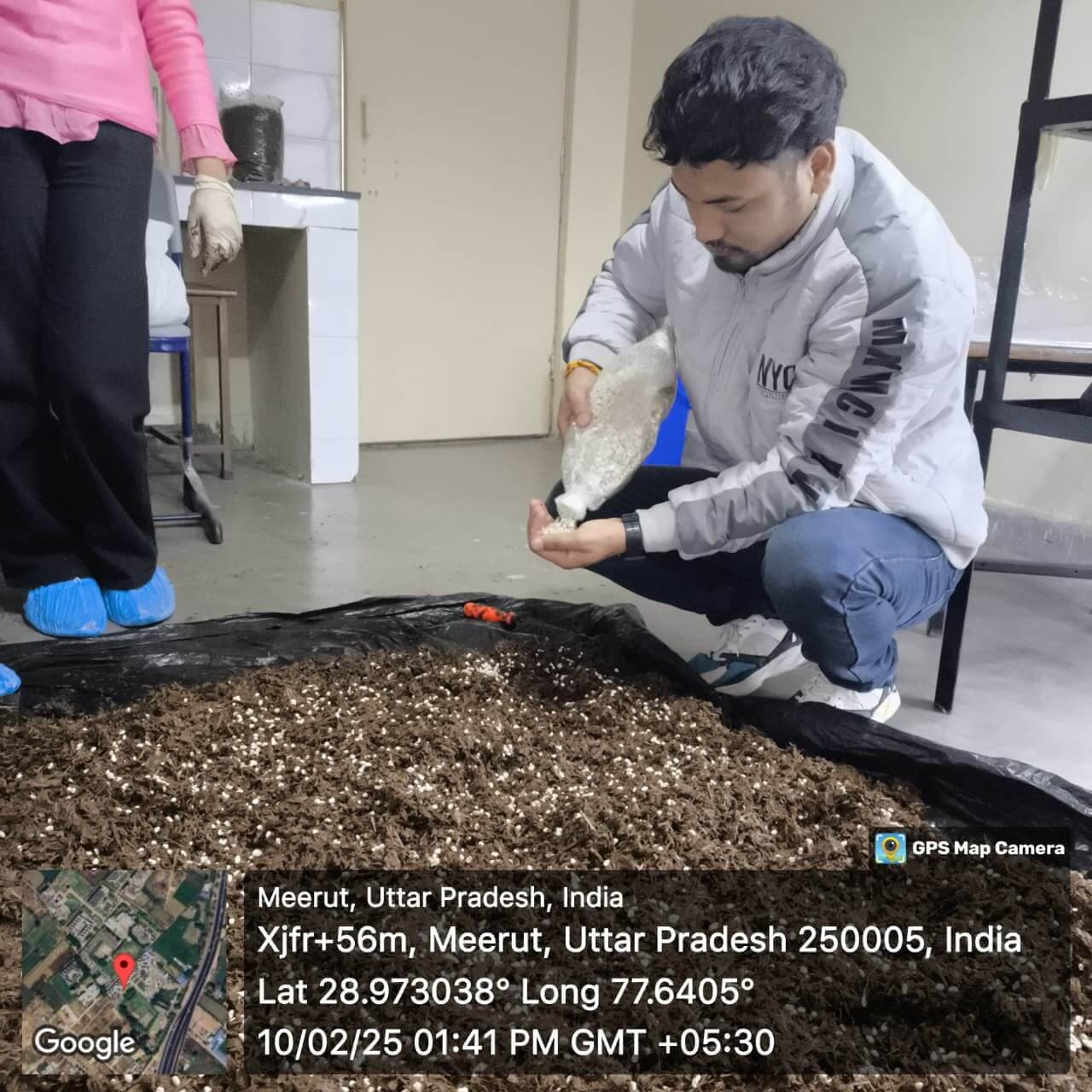
From Section 4 of the research document: Two distinct spawning techniques were evaluated in parallel to assess mycelial growth rate, uniformity, and colonization vigor in transparent bags.
Spawning by Layering Method
A layer of compost substrate was placed in bags, followed by an evenly distributed horizontal layer of grain spawn. The process was repeated until the bags were half-filled.
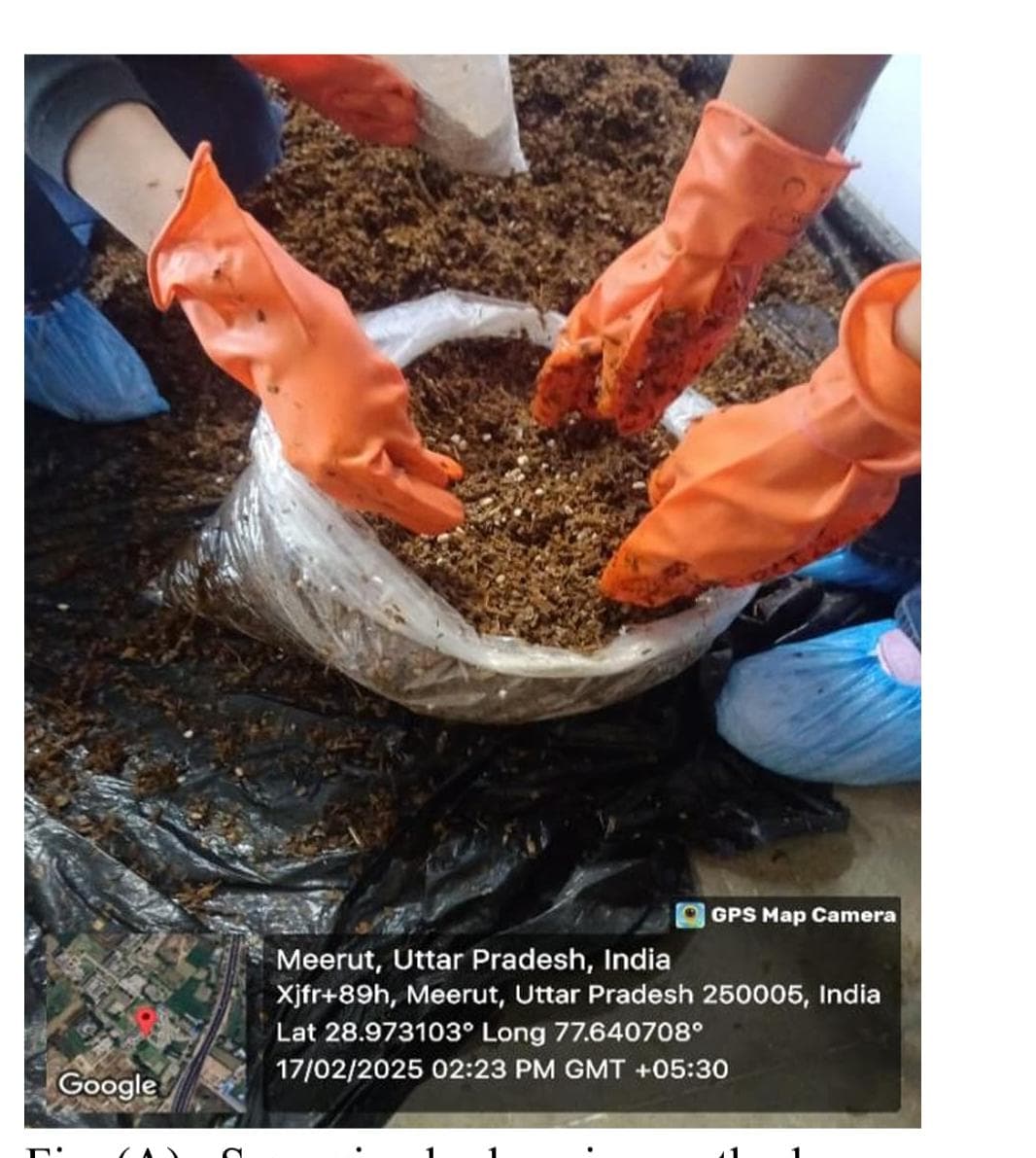
Spawning by Thorough Mixing Method
Grain spawn was thoroughly and uniformly mixed with the prepared substrate throughout the entire volume before filling into incubation bags.
Sterilized Cocopeat Casing Layer
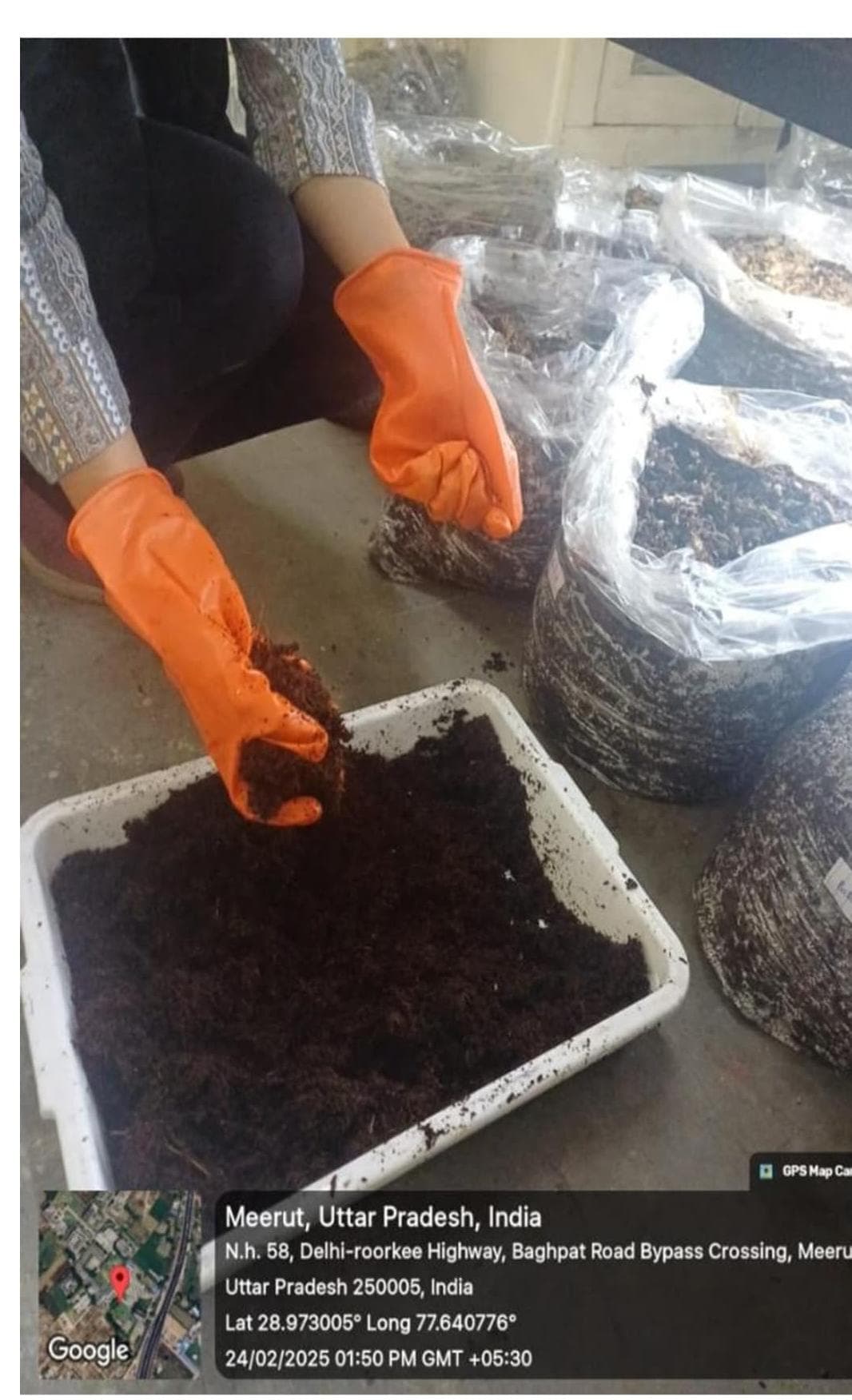
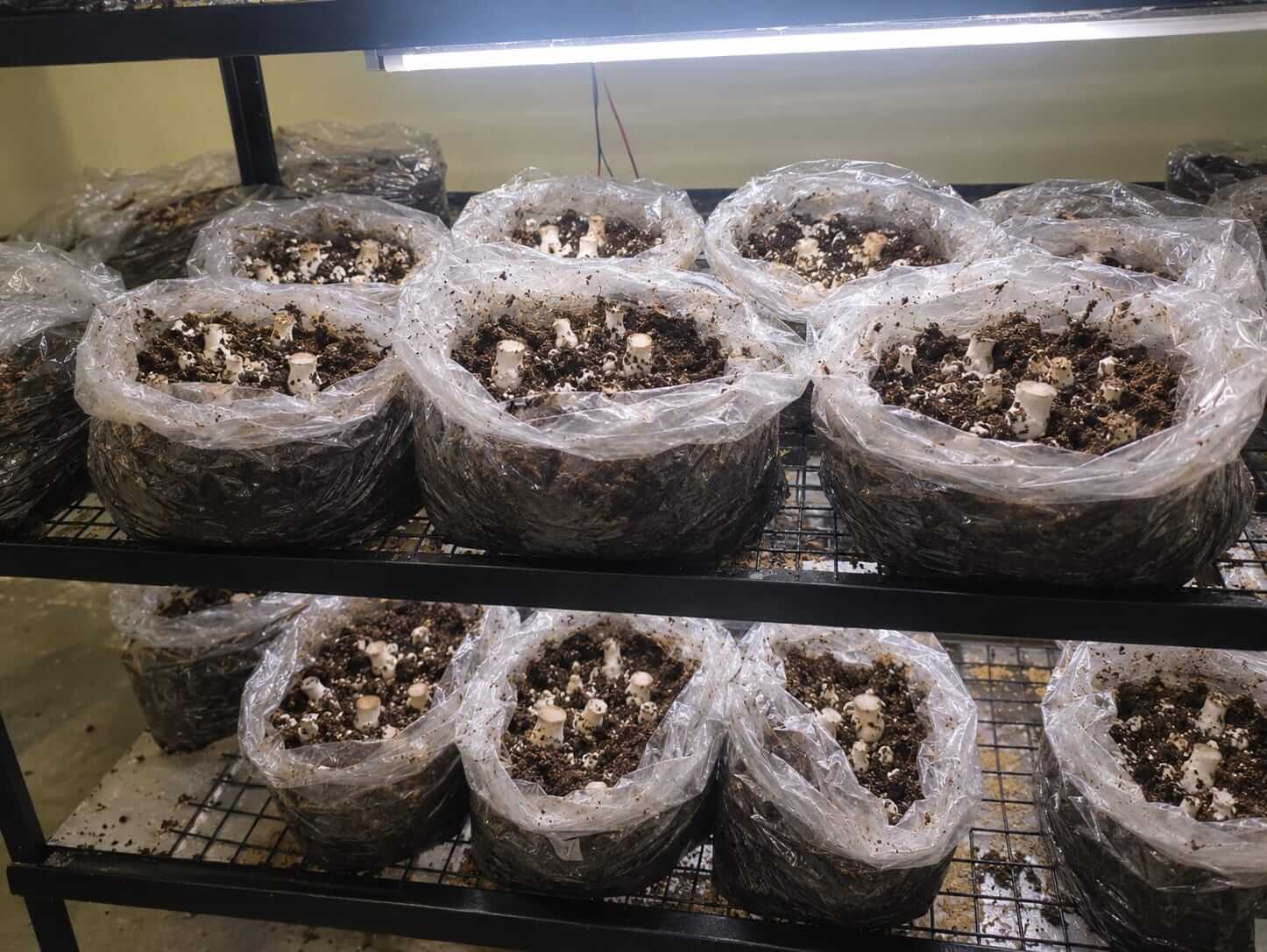
Once the substrate was fully colonized by mycelium, casing was applied. Cocopeat was selected as the primary casing material due to its extraordinary water holding capacity and neutral porosity.
- Sterilization Protocol: Soaking cocopeat in a 2% formalin solution for several hours to eliminate any latent spores or soil pests before application.
- Moisture Reservoir: Maintains high surface humidity without suffocating the underlying substrate, preventing drying out during pinning.
- Fruiting Trigger: The nutrient-poor casing layer signals the vegetative mycelium to transition into reproductive primordia (pinheads).