Market Potential & Industrial Applications
The full economic and industrial landscape unlocked by parali-based button mushroom cultivation—spanning functional food, organic agriculture, livestock nutrition, skincare nutraceuticals, clean air, biomaterial packaging, and clean energy.
Why Button Mushrooms (Agaricus bisporus)?
Button mushrooms are among the most popular and widely consumed mushroom varieties globally, accounting for over 40% of global mushroom production. Known for their mild flavor, culinary versatility, and exceptional nutritional profile, demand in urban Indian markets and export channels is surging at over 9% CAGR.
$50B+
Total global mushroom industry valuation by 2026.
~0 Cost
Replaces costly conventional inputs with surplus straw.
+35% Margin
Consumers willingly pay premium for zero-fire organic food.
7 Transformative Industrial Applications
Detailed breakdown of how parali-based cultivation touches food processing, regenerative agriculture, veterinary science, clean packaging, cosmetics, and renewable energy.
Nutritious Food & Natural Flavor Extracts
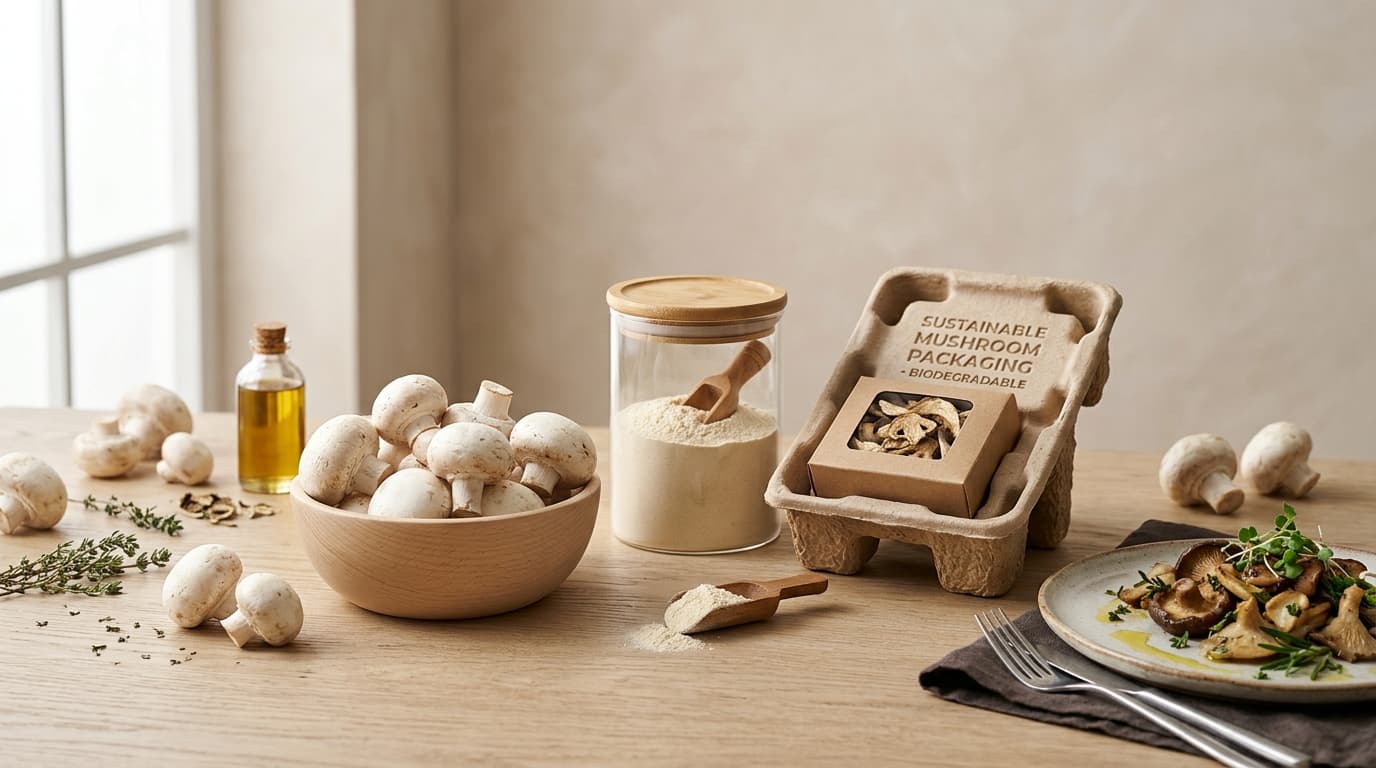
Cultivated button mushrooms are packed with lean protein, B vitamins, selenium, potassium, and antioxidants. Dehydrated powders serve as natural flavor enhancers in soups, sauces, and functional plant-based meat analogs.
Spent Mushroom Substrate (SMS) Bio-Fertilizer
After mushroom flushes are complete, the partially digested parali substrate is enriched with fungal enzymes, nitrogen, phosphorus, and organic matter. When applied back to farm soils, it improves soil water retention, restores microbial flora, and eliminates chemical fertilizer dependencies.
Enriched Livestock & Animal Feed Formulations
Raw parali is notoriously high in silica and lignin, making it difficult for ruminants to digest. Mushroom fungal enzymes break down complex lignocellulose and enrich the straw with fungal biomass protein, turning a discarded waste into high-quality animal forage.
Skincare Bioactives & Dietary Nutraceuticals
Button mushroom mycelium and fruiting bodies contain bioactive compounds known for anti-inflammatory, antioxidant, and skin-hydration properties. Ergothioneine and polysaccharides are actively extracted for premium clean-label cosmetic serums and immunity supplements.
Eradication of Stubble Burning & GHG Emissions
Every winter, millions of tonnes of paddy stubble are burnt across Punjab, Haryana, and Western UP, releasing massive clouds of PM2.5, carbon monoxide, nitrogen dioxide, and black carbon. Straw2Shrooms converts this fire hazard into an economic goldmine for farmers.
Biodegradable Mycelium Packaging Materials
By allowing fungal mycelium to grow through shredded parali fibers inside custom molds, rigid, lightweight, and naturally flame-resistant packaging blocks are produced. They decompose in garden soil within 45 days, leaving zero toxic microplastics.
Fermentable Sugars for Biogas & Bio-Energy
Mushrooms secrete powerful extracellular cellulases and laccases that naturally soften tough straw fibers. The resulting hydrolysate serves as an optimal feedstock for anaerobic digestors, boosting biomethane output significantly compared to untreated straw.
Value-Addition & Export Diversification
While fresh button mushrooms provide immediate daily cash flow, secondary processing extends shelf life and multiplies profit margins by 300-500%:
Solar-Dried Button Slices
Extends shelf life from 4 days to 12 months with zero cold storage electricity costs. High demand in soup mixes and camping food.
Mushroom Umami Protein Powder
Fine dietary supplement and culinary flavor enhancer. High in natural glutamates and fungal protein with clean organic credentials.
Molded Mycelium Packaging
Grown-to-shape parali fiber blocks replacing non-degradable expanded polystyrene (Styrofoam) in consumer electronics packaging.